
Your Garage Door Shouldn't Sound Like That
If you've ever hit the button on your garage door opener and cringed at the sound that followed, you're not alone. Homeowners across Casa Grande deal with noisy garage doors every day, and most just learn to live with it. But here's the thing — those sounds aren't normal, and they're almost always a sign that something needs attention.
A properly maintained garage door should operate relatively quietly. When it starts grinding, squealing, rattling, or banging, it's giving you a warning. The good news is that most of these issues are fixable, and catching them early can save you from a much bigger repair bill down the road.
Let's break down the most common garage door noises, what's causing them, and what you should do about each one.
Grinding or Scraping Sounds
A grinding or scraping noise is one of the more concerning sounds your garage door can make. This usually points to one of a few issues:
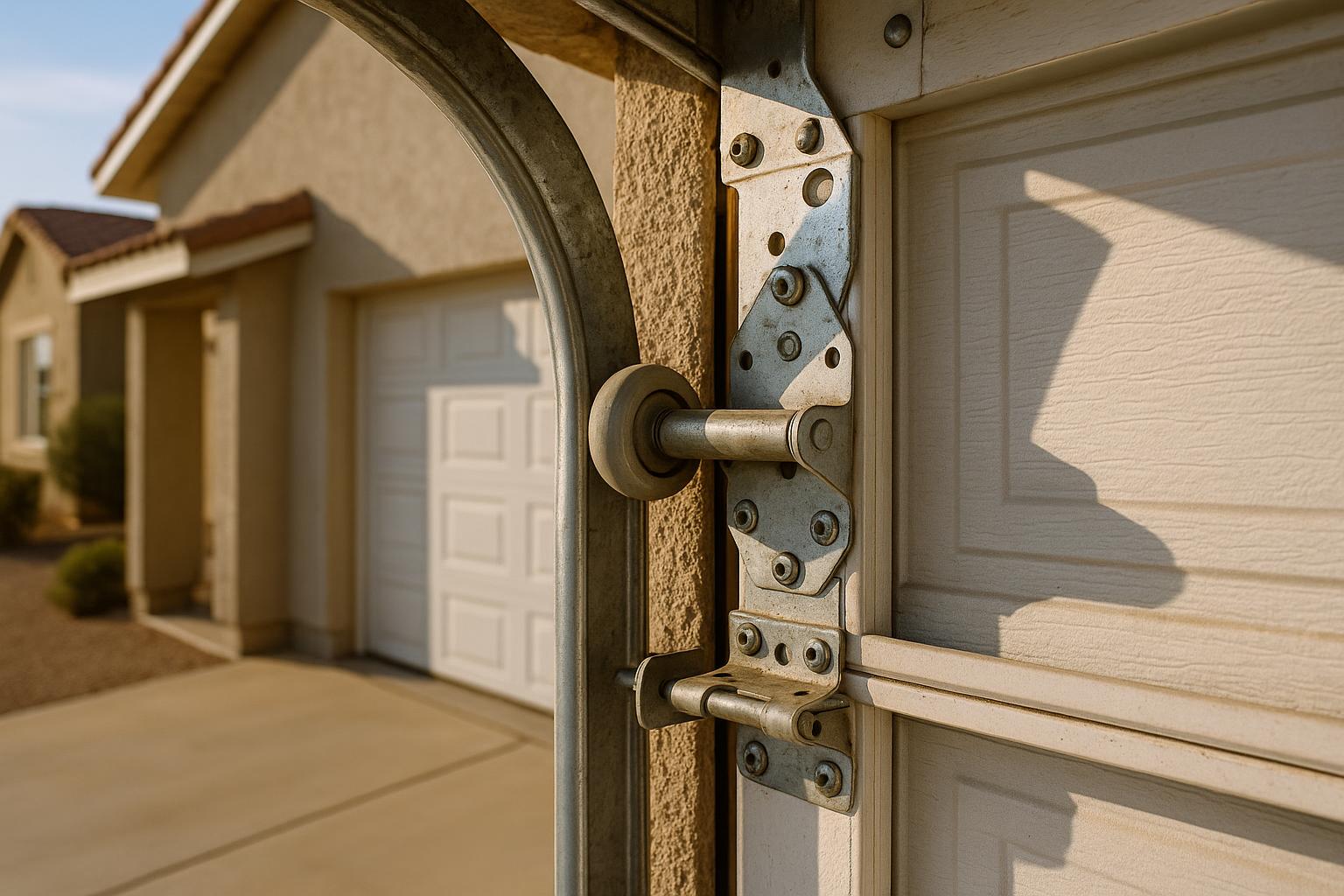
- Worn rollers: Metal rollers wear down over time, especially in the dry, dusty conditions we deal with here in Casa Grande. When the rollers lose their smooth surface, they grind against the tracks as the door moves up and down.
- Misaligned tracks: If the vertical or horizontal tracks have shifted even slightly, the door can scrape against the metal as it travels. This not only creates noise but can also cause uneven wear on the door panels.
- Opener gear issues: If the grinding sound seems to come from the opener unit itself rather than the door, the internal gears may be stripped or wearing out. This is especially common in older chain-drive openers.
Grinding sounds tend to get worse over time, not better. If you're hearing this, it's worth having a technician take a look before a minor issue turns into a major one.
Squealing or Squeaking Sounds
A high-pitched squeal or squeak is one of the most common garage door complaints, and it's often one of the easiest to address. Common causes include:
- Lack of lubrication: The hinges, rollers, springs, and bearings all need periodic lubrication to operate smoothly. Arizona's dry desert climate accelerates this problem — lubricant dries out faster here than in more humid regions.
- Worn weather stripping: The rubber seal along the bottom of the door can dry out and harden, creating a squealing noise as it drags across the garage floor.
- Torsion spring friction: The torsion springs above the door coil and uncoil every time the door operates. Without proper lubrication, the coils rub against each other and produce a noticeable squeak.
A quality garage door lubricant — not WD-40, which is a solvent and not a long-term lubricant — applied to the moving parts can often eliminate squeaking immediately. If the noise persists after lubrication, there may be a deeper mechanical issue at play.
Rattling or Vibrating Sounds
Rattling is usually a sign that something is loose. Given how many times a garage door opens and closes over the years, it's no surprise that hardware loosens up. Here's what to check:
- Loose nuts and bolts: The brackets, hinges, and track mounts are all held together with hardware that can vibrate loose over time. A simple tightening with a socket wrench can often solve the problem.
- Loose chain or belt: If you have a chain-drive or belt-drive opener, the chain or belt can develop slack. A loose chain will slap against the rail and create a rattling sound during operation.
- Worn support brackets: The brackets that hold the tracks to the wall and ceiling can wear out or pull away from their anchors, especially in older homes.
While tightening loose hardware is something many homeowners can handle, be cautious around anything connected to the springs or cables. Those components are under extreme tension and should only be serviced by a trained professional.
Banging or Popping Sounds
A loud bang or pop when your garage door operates is harder to ignore — and for good reason. These sounds often indicate a more serious problem:
- Panel sections binding: If the door panels aren't moving smoothly through the track, they can catch and then release suddenly, creating a popping or banging sound.
- Spring tension issues: Torsion springs that are improperly adjusted can cause the door to jerk or slam during operation. This puts stress on the entire system and can lead to premature failure.
- Broken or damaged rollers: When a roller cracks or breaks, the door can momentarily drop or shift, producing a loud bang that sounds alarming.
If your garage door is banging, don't ignore it. This type of noise often means the door is under stress in ways it shouldn't be, and continued use could lead to the door coming off its tracks or a spring breaking unexpectedly.
When Noise Means It's Time for an Upgrade
Sometimes the noise isn't caused by a single failing part — it's the result of an aging system that's simply worn out. If your garage door is 15 to 20 years old and making multiple types of noise despite regular maintenance, it may be more cost-effective to replace the door or opener rather than continuing to repair individual components.
Modern garage doors and openers are significantly quieter than older models. Belt-drive openers, for example, operate almost silently compared to the chain-drive units that were standard a decade or two ago. If your garage is attached to your home — as most are in Casa Grande neighborhoods — upgrading to a quieter system can make a noticeable difference in your daily comfort.
The Impact of Arizona's Climate on Garage Door Noise
It's worth noting that living in the desert creates unique challenges for garage doors. The extreme heat we experience in Casa Grande during summer months causes metal components to expand, which can amplify existing alignment issues. Dust and fine sand work their way into tracks and rollers, accelerating wear. And the intense UV exposure degrades rubber seals and plastic components faster than in milder climates.
This is why preventive maintenance matters so much here. A garage door in Casa Grande simply takes more of a beating from the elements than one in a cooler, more temperate region. Regular service keeps those climate-related issues from turning into expensive repairs.
Don't Just Turn Up the Radio
It's tempting to just ignore a noisy garage door, especially when everything still seems to be working. But every unusual sound is a symptom of something, and those somethings tend to get worse — and more expensive — over time.
If your garage door is making sounds it didn't used to make, the smartest move is to have it inspected by someone who knows what to look and listen for. At Casa Grande Garage Door Service, we diagnose the problem, explain your options in plain English, and fix it right the first time. Whether it's a simple lubrication, a roller replacement, or a full system upgrade, we're here to help homeowners across Casa Grande, Coolidge, Maricopa, and the surrounding communities keep their garage doors running quietly and reliably.
Give us a call or reach out online to schedule an inspection. Your ears — and your garage door — will thank you.