
Your Garage Door Springs Are Trying to Tell You Something
If you've ever had a garage door spring snap, you know it's not a subtle event. The loud bang, the door that suddenly won't open, the scramble to figure out what happened — it's stressful, inconvenient, and sometimes dangerous. But here's the thing most homeowners in Casa Grande don't realize: garage door springs almost always show warning signs before they fail completely.
Knowing what to look for can save you from getting stuck with a door that won't budge on a Monday morning when you're already running late. More importantly, it can keep you and your family safe. Let's walk through the signs that your garage door springs are on their way out and what you should do about it.
How Garage Door Springs Work (A Quick Overview)
Before we get into the warning signs, it helps to understand what your springs actually do. Your garage door is heavy — most residential doors weigh between 130 and 350 pounds. The springs carry the vast majority of that weight, making it possible for your opener (or your arms) to lift the door with minimal effort.
There are two main types of garage door springs:
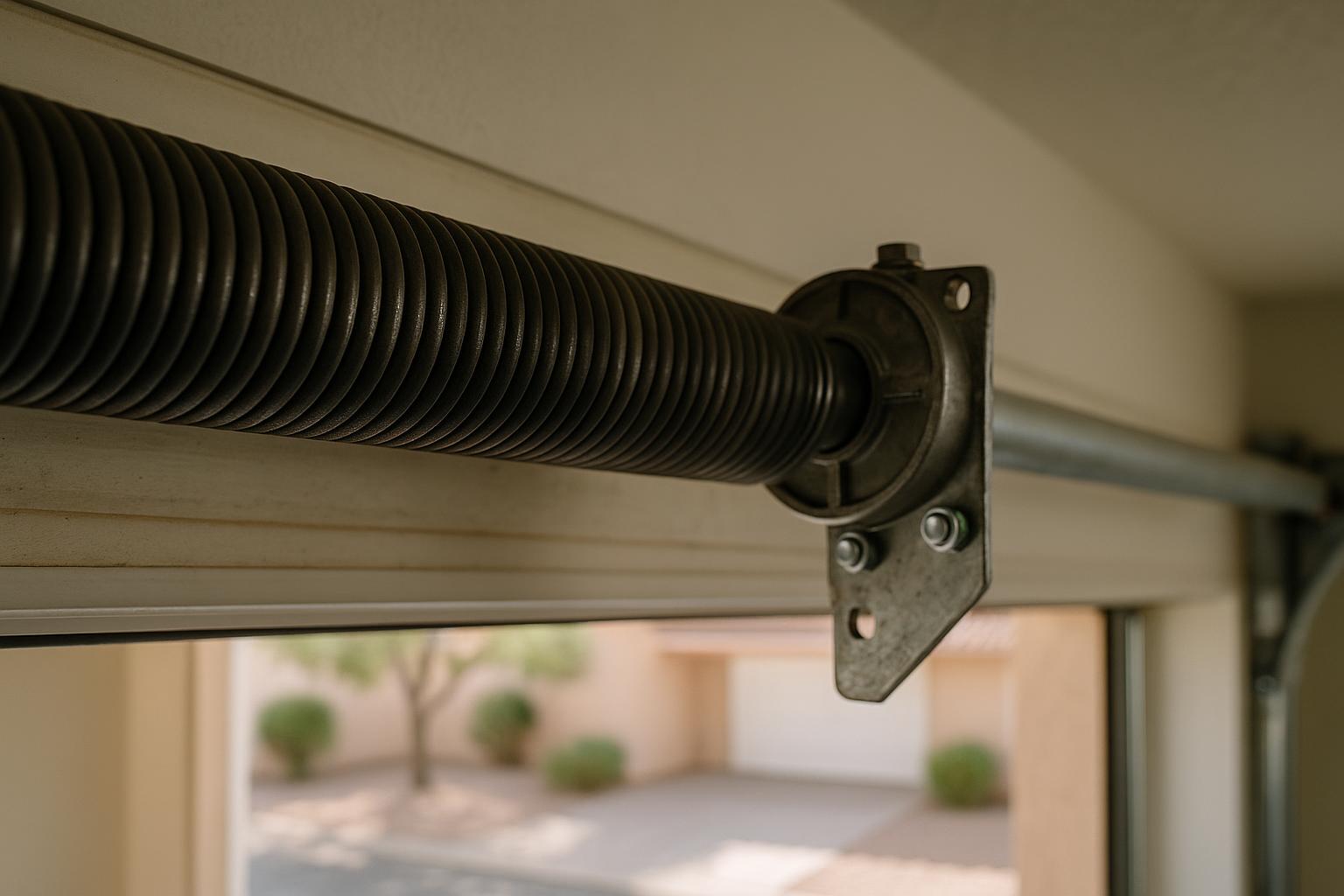
- Torsion springs — mounted on a metal shaft above the door opening. These are the most common type in modern garage doors.
- Extension springs — mounted along the horizontal tracks on either side of the door. These are more common in older installations.
Both types are under extreme tension, which is why spring replacement is one of the most dangerous garage door repairs and should always be handled by a professional.
7 Warning Signs Your Springs Are Failing
1. Your Door Feels Heavier Than Usual
Try this simple test: disconnect your garage door opener by pulling the emergency release handle, then manually lift the door about halfway. A properly balanced door with healthy springs should stay in place on its own. If the door feels noticeably heavy, slides back down, or is difficult to lift, your springs are losing tension and nearing the end of their life.
2. The Door Opens Unevenly or Crooked
If your garage door tilts to one side as it opens or closes, one of your springs may be weaker than the other. This is especially common with extension spring systems that have a spring on each side. An uneven door puts extra stress on your tracks, cables, and opener — and it's a clear sign that at least one spring needs attention.
3. You Hear Squeaking, Grinding, or Popping Sounds
Some noise is normal, but new or worsening sounds during operation are a red flag. Squeaking and grinding can indicate that a spring is corroding or losing lubrication. A loud popping or cracking sound during operation could mean the spring is starting to separate. If you hear anything unusual, it's worth having a technician take a look before the spring fails completely.
4. Visible Gaps in the Spring Coils
This one is easy to spot if you know where to look. A healthy torsion spring has tightly wound coils with no visible gaps. If you see a gap — even a small one — it means the spring has already partially broken or stretched beyond its functional limit. Do not attempt to operate the door if you see a gap in the coils. Call a professional immediately.
5. The Door Slams Shut Instead of Closing Smoothly
When springs are in good condition, they control the speed of the door as it closes, providing a smooth, controlled descent. If your door drops quickly or slams the last few inches, the springs are no longer providing adequate counterbalance. This is both a safety hazard and a sign that a full break is imminent.
6. Your Opener Is Straining or Stopping Mid-Cycle
Your garage door opener is designed to move a balanced door, not to do all the heavy lifting on its own. When springs weaken, the opener has to work much harder. You might notice the motor running louder, the door moving slower, or the opener stopping partway through a cycle. Continuing to operate the door this way can burn out your opener motor, turning a spring replacement into a much more expensive repair.
7. The Springs Are Visibly Rusty or Corroded
Living in Casa Grande, our dry desert climate is actually easier on springs than humid environments. But springs still corrode over time, especially if they haven't been lubricated regularly. Rust weakens the metal and increases friction, which accelerates wear. If your springs look rusty and rough, they're more likely to snap without much additional warning.
How Long Do Garage Door Springs Last?
Most standard garage door springs are rated for approximately 10,000 cycles — one cycle being one full open and one full close. For the average household that opens and closes the garage door four times a day, that works out to roughly seven years.
However, several factors can shorten or extend that lifespan:
- Usage frequency — Families that use the garage as their primary entrance may cycle the door six to eight times daily, cutting spring life significantly.
- Maintenance — Springs that are lubricated and inspected regularly tend to last longer.
- Quality — Higher-cycle springs (rated for 25,000 or even 50,000 cycles) are available and worth the investment if you want to avoid frequent replacements.
- Temperature swings — While Casa Grande doesn't deal with freezing winters often, the extreme summer heat and temperature fluctuations between day and night can stress metal components over time.
Why You Should Never Replace Springs Yourself
We understand the DIY spirit — and for many garage door tasks, a handy homeowner can handle things just fine. Spring replacement is not one of those tasks. Torsion springs are wound under tremendous force, and an improper release or installation can cause serious injury or even death. Every year, emergency rooms across the country treat people who attempted DIY spring repairs.
A trained technician has the tools, experience, and knowledge to replace springs safely and correctly. They'll also ensure the door is properly balanced afterward, which protects your opener and extends the life of the new springs.
What to Do If You Notice These Signs
If any of the warning signs above sound familiar, here's what we recommend:
- Stop using the door if you see a visible gap in the spring or if the door is slamming shut uncontrollably.
- Schedule an inspection with a qualified garage door technician. At Casa Grande Garage Door Service, we can typically get to you the same day or next day.
- Ask about high-cycle springs when it's time for replacement. They cost a bit more upfront but save you money and hassle over the long run.
- Consider a full tune-up while the technician is there. If your springs are aging out, your cables, rollers, and other hardware may be due for attention too.
Keep Your Home Safe and Your Door Running
A broken garage door spring is one of the most common service calls we handle across Casa Grande, Coolidge, Maricopa, and the surrounding communities. And in almost every case, the homeowner tells us they noticed something was off days or even weeks before the spring finally gave out. The good news is that catching the problem early makes the repair faster, safer, and often less expensive.
If your garage door isn't acting right, don't wait for the loud bang. Give Casa Grande Garage Door Service a call and let us take a look. We'll give you an honest assessment and get your door back to working the way it should.