
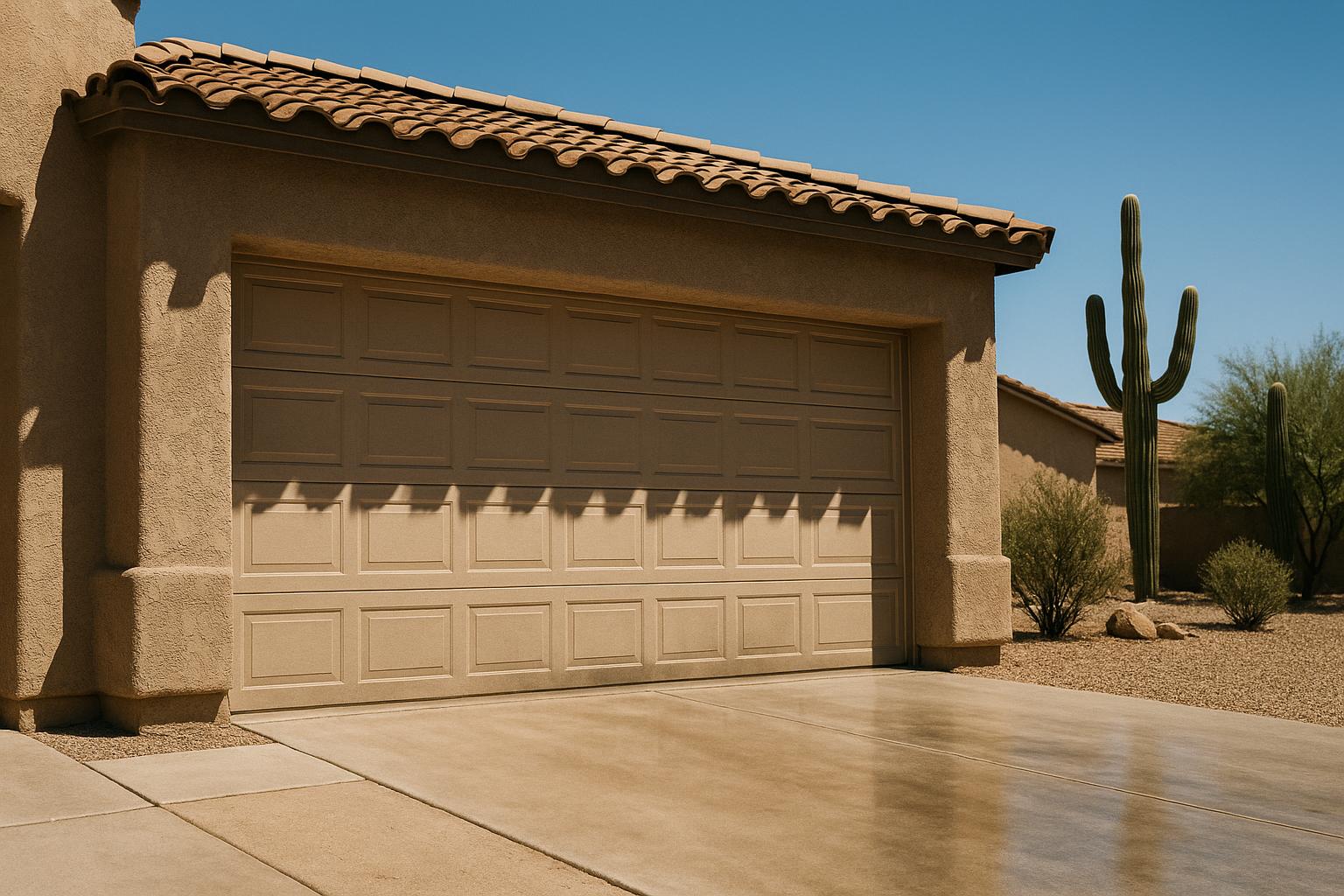
When Triple-Digit Heat Meets Your Garage Door
If you've lived in Casa Grande for even one summer, you know what 115°F feels like. You also know it affects everything — your car, your AC unit, your energy bill, and yes, your garage door. Every summer, we get a surge of calls from homeowners whose garage doors suddenly won't open, close unevenly, or stop working altogether. The culprit? Extreme heat.
Arizona's desert climate creates unique challenges for garage door systems. Metal expands, lubricants dry out, electronics overheat, and weatherstripping warps. Understanding how heat affects your garage door can help you prevent a breakdown on the hottest day of the year — which always seems to be when things go wrong.
How Extreme Heat Affects Your Garage Door System
Your garage door isn't just a single panel that goes up and down. It's a system of metal tracks, springs, rollers, cables, sensors, and an electric opener — all of which react to temperature changes. Here's what happens when the mercury climbs past 100°F in Casa Grande and the surrounding areas.
Metal Expansion and Track Misalignment
Metal expands when it gets hot. Your garage door tracks, made of steel or aluminum, can expand just enough to cause the door to bind, stick, or move unevenly. In most cases, the expansion is subtle, but over time — especially if the tracks weren't perfectly aligned to begin with — it can cause real problems. You might notice the door dragging on one side or hesitating partway through its travel.
Dried-Out Lubricant
The lubricant on your rollers, hinges, and springs doesn't last long when it's baking in a garage that can reach 130°F or more on a summer afternoon. Once the lubrication dries out, you get increased friction, which puts extra strain on your opener motor and accelerates wear on moving parts. This is one of the most common — and most preventable — heat-related garage door issues.
Garage Door Opener Overheating
Your garage door opener has a motor, a circuit board, and various electronic components. Like any piece of electronics, it has an operating temperature range. When your garage becomes an oven, the opener can overheat and shut down as a safety precaution. Some openers have a thermal overload protector that temporarily disables the unit until it cools down. If your garage door opener suddenly stops responding but the lights on the unit are still on, overheating may be the cause.
Sensor Malfunctions
The safety sensors at the bottom of your garage door tracks use infrared beams to detect obstructions. Direct sunlight hitting these sensors — especially during early morning or late afternoon when the sun is at a low angle — can interfere with the signal. When the sensors can't communicate properly, your door may refuse to close or reverse immediately after you hit the button.
Weatherstripping Damage
The rubber weatherstripping along the bottom and sides of your garage door is designed to seal out dust, pests, and moisture. Prolonged UV exposure and extreme heat cause this material to crack, warp, and peel away. Damaged weatherstripping lets hot air, dust, and even scorpions into your garage — none of which you want.
What You Can Do to Protect Your Garage Door This Summer
The good news is that most heat-related garage door problems are preventable with a little proactive care. Here are practical steps Casa Grande homeowners can take before and during the summer months.
Keep Moving Parts Lubricated
Apply a silicone-based garage door lubricant to your rollers, hinges, springs, and tracks at least twice during the summer. Avoid using WD-40 as a lubricant — it's a solvent, not a long-term lubricant, and it evaporates quickly in the heat. A proper silicone or lithium-based spray will hold up much better in high temperatures.
Shade and Ventilate Your Garage
If your garage faces south or west, it's absorbing direct sunlight for hours every day. Consider these options to bring the temperature down:
- Install a garage ventilation fan or exhaust vent to circulate air
- Add insulation to your garage door panels if they aren't already insulated
- Use a reflective garage door screen or shade when the door is open
Lowering the ambient temperature in your garage helps protect your opener, lubricants, and weatherstripping from premature failure.
Shield Your Safety Sensors
If sunlight is interfering with your garage door sensors, you can create a simple shade using a small piece of cardboard or a purpose-built sensor shade. Position it so it blocks direct sunlight from hitting the sensor lens without obstructing the infrared beam between the two sensors. This is a quick fix that solves a frustrating problem.
Replace Worn Weatherstripping
Inspect the rubber seal along the bottom of your door and the weatherstripping around the frame. If it's cracked, brittle, or pulling away, replace it before summer is in full swing. New weatherstripping is inexpensive and makes a noticeable difference in keeping your garage cooler and cleaner.
Schedule a Pre-Summer Tune-Up
The best way to avoid a heat-related breakdown is to have your garage door professionally inspected and serviced before temperatures peak. A technician can check track alignment, test spring tension, lubricate all moving parts, inspect the opener's electrical components, and identify small problems before they become expensive repairs.
When to Call a Professional
Some heat-related issues are easy to handle yourself — adding lubricant, shading a sensor, or replacing a weatherstrip. But other problems require professional attention:
- The door won't open or close at all — This could indicate a failed opener motor, broken spring, or electrical issue.
- The door moves unevenly or makes new sounds — Track misalignment or worn rollers may need professional adjustment or replacement.
- The opener runs but the door doesn't move — The drive gear or trolley may have stripped, which is common when an overheating motor is forced to work harder.
- Springs look stretched or corroded — Never attempt to adjust or replace garage door springs yourself. They're under extreme tension and can cause serious injury.
If you're in Casa Grande, Maricopa, Coolidge, or anywhere in the surrounding area, Casa Grande Garage Door Service can diagnose and fix heat-related garage door problems quickly. We understand the local climate and the toll it takes on garage door systems because we live and work here too.
Don't Wait for a Breakdown
A garage door that fails in the middle of an Arizona summer isn't just inconvenient — it can leave your home exposed to extreme heat, compromise your security, and leave your vehicles stuck inside or outside. Taking a few preventive steps now can save you from an emergency repair call later.
If it's been a while since your garage door was serviced, or if you've already noticed signs of heat-related wear, give us a call. We'll make sure your garage door is ready to handle whatever this Casa Grande summer throws at it.